Niche Edits for GEO: The Underrated AI-Search Link
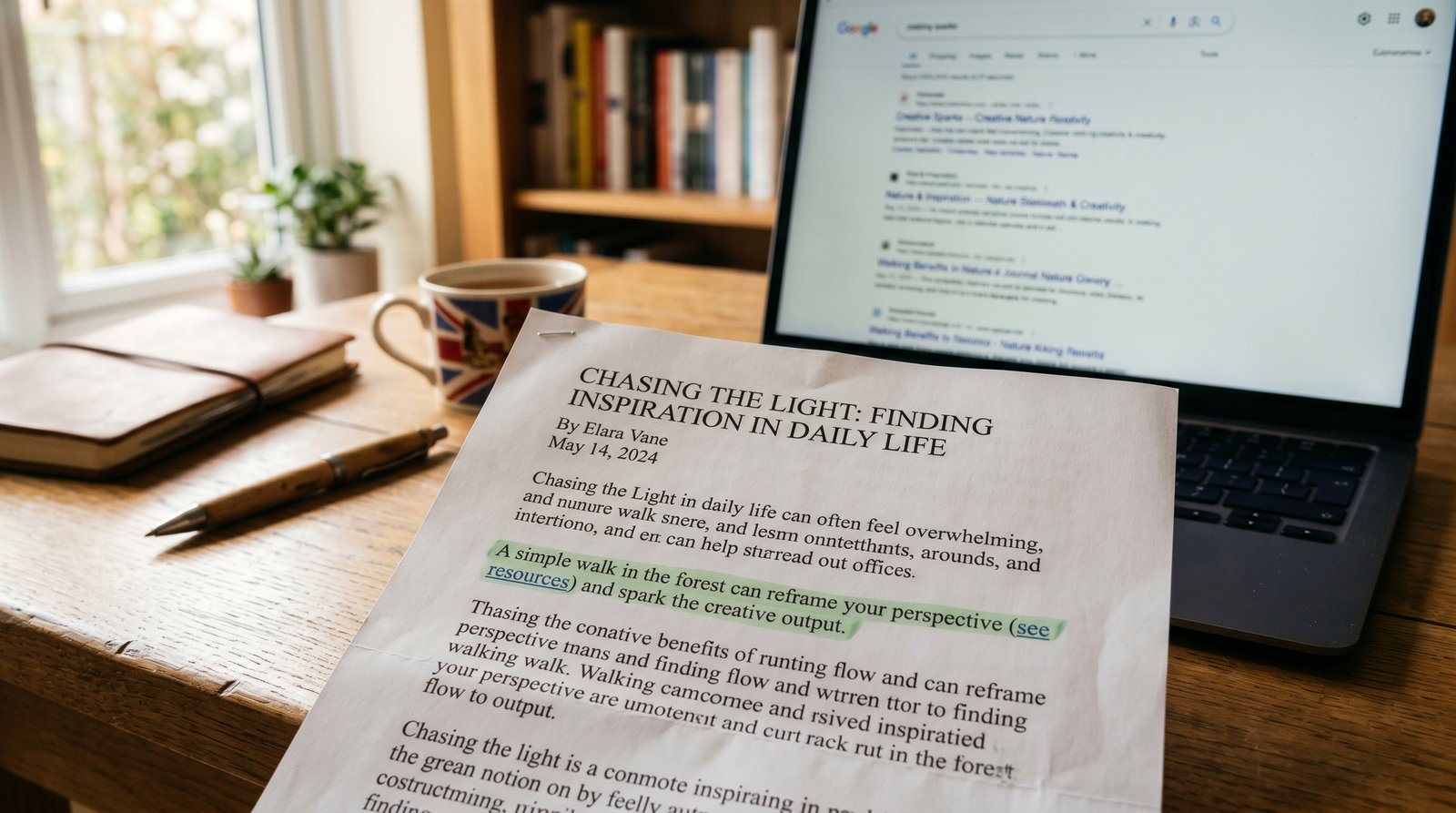
A niche edit is a contextual link added to a page that already exists and already ranks. Because AI engines like ChatGPT, Perplexity and Google AI Overviews pull from pages they already trust, a relevant edit on a cited page can earn a citation in two to four weeks. That is faster and cheaper than waiting for a brand-new guest post to be crawled, trusted and then cited.
We run link placements for a living, so this is the route we reach for first when a client needs AI visibility quickly. It is also the most misunderstood link type in GEO, so this post names what it is, why it works, and how to find the pages worth editing.
Key takeaways
- A niche edit inserts your link into a page that is already indexed and often already cited.
- On already-cited pages, that inherited trust can earn a citation in two to four weeks.
- You can find those pages for free: query an AI engine and open its sources.
- Use branded and natural-language anchors, not exact-match commercial phrases.
- Niche edits and guest posts are not rivals. Use niche edits for speed, guest posts for coverage.
What a niche edit actually is
A niche edit is a single contextual link placed inside an article that is already live. Nothing new gets published. You find a relevant, established page and add one sentence with a link that genuinely helps the reader.
The term sounds like jargon, so people skip past it. That is the opportunity. Most GEO advice talks about writing new content and adding schema. Almost nobody explains that editing a page AI already reads is the shortest path to a citation.
Why an already-cited page is worth more than ten new links
Here is the core idea. AI engines do not start from scratch for every answer. They lean on a pool of pages they already trust and already crawl. If your link sits inside one of those pages, it inherits that trust the moment it goes live.
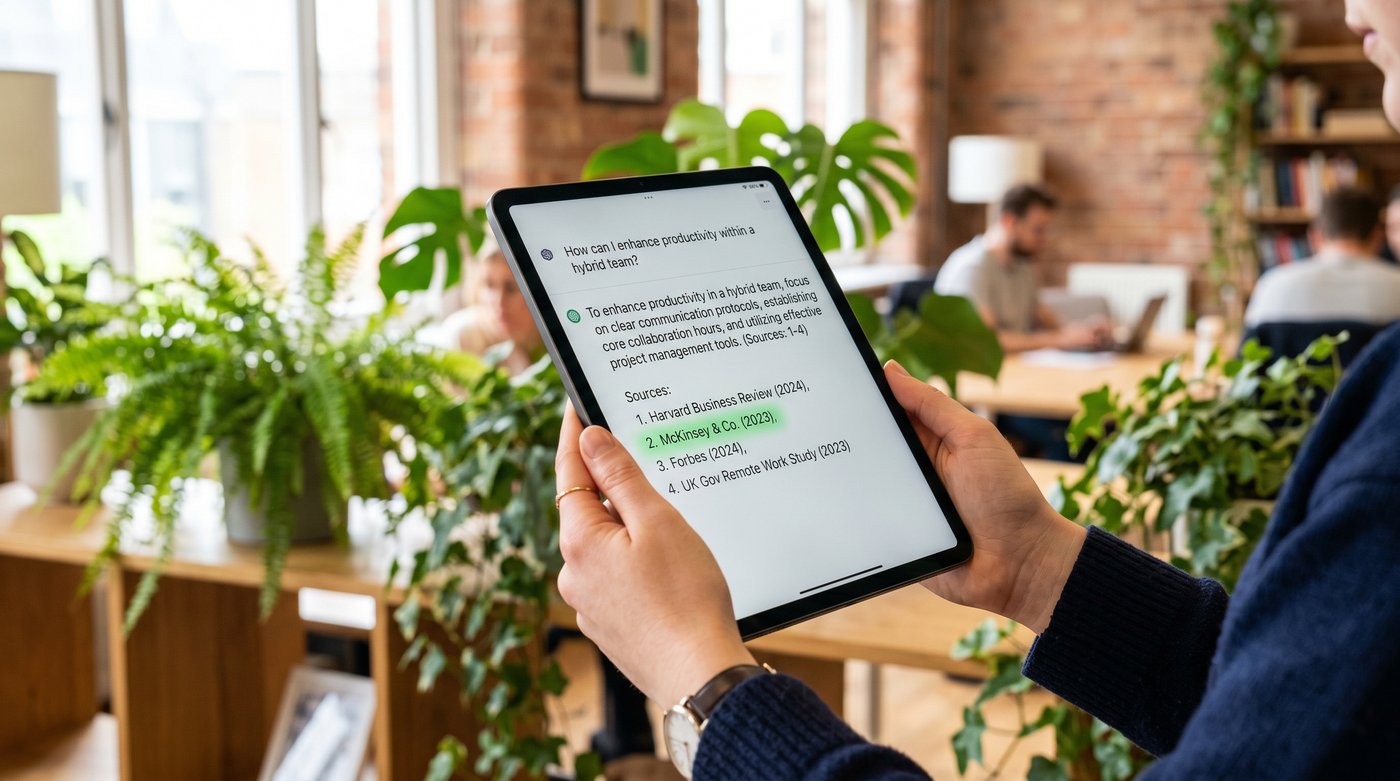
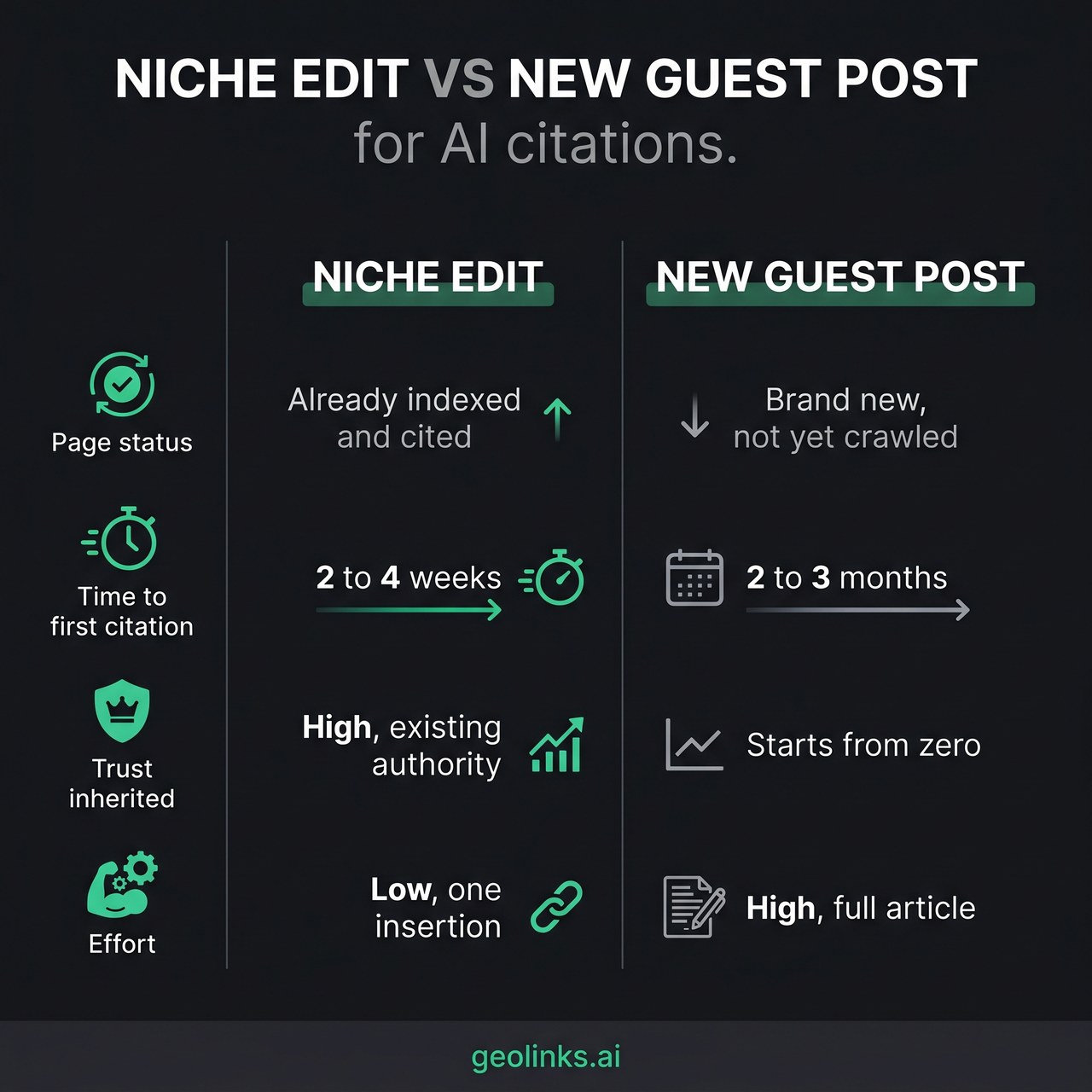
A brand-new guest post has to earn all of that from zero. It has to be discovered, crawled, judged trustworthy, then pulled as a source. That cycle takes months. A niche edit on a page the engine already cites skips the queue. On Garden UK we lifted referring domains from 27 to 149 and Domain Rating from 0 to 15 in months, mostly through contextual placements on pages that were already established rather than a pile of fresh articles.
How to find pages AI already cites (free method)
You do not need a tool for the first pass. You need the engines themselves.
- Write down the exact question a buyer asks about your topic.
- Ask it in ChatGPT, Perplexity, Gemini and Google AI Overviews. The source pools differ by engine, so check several.
- Open every cited source and list the URLs.
- Filter for pages where a link to your content would genuinely help the reader.
- Pitch a short, useful edit to the owner of each page.
That list is gold. The engine has already told you which pages it trusts for your topic. Per-engine source patterns differ a lot, which we break down in the per-engine citation sources playbook, so do not stop at ChatGPT alone.
Niche edit vs guest post vs digital PR
Each link type does a different job for AI visibility. A niche edit buys speed. A guest post builds a fresh, controllable asset. Digital PR earns the kind of third-party corroboration that AI engines weight heavily, since around 91% of citations come from sources you do not own.
| Link type | Best for | Time to citation | Cost per citation |
|---|---|---|---|
| Niche edit | Speed on a trusted page | 2 to 4 weeks | Low |
| New guest post | A controllable new asset | 2 to 3 months | Medium |
| Digital PR | Third-party corroboration | 1 to 3 months | High |
None of these is a magic bullet on its own. Monitoring tools and schema will not earn the citation either, which we cover in GEO that doesn’t work. The link doing the work has to sit on a page an engine trusts.
The anchor text split
Anchor text still matters, but not the way it did for old-school SEO. AI engines build associations between entities. A branded anchor next to your topic teaches the model who you are and what you do.
So lead with branded and natural-language anchors. Reserve exact-match commercial phrases for rare cases. Over-optimised anchors read as manipulation and tend to earn fewer citations, not more. This pattern shows up clearly when you study which pages actually get pulled, a theme we cover in why AI cites pages ranking below position five.
How we run it
In practice the work is unglamorous, which is why it gets skipped. We map the prompts a client wants to win, pull the cited pages per engine, then pitch genuinely useful edits to the owners.

The honest part: not every pitch lands, and a niche edit on a weak page is worthless. The value is concentrated in pages the engines already cite. Get the link onto one of those, refresh the page, and the citation usually follows within a month. Then we measure it, using the five numbers in our AI citation reporting template, so the result is provable rather than assumed.
Common questions
What is a niche edit?
A niche edit is a contextual link added to a page that already exists and is already published. The host page is already indexed and often already cited, so a relevant link inside it can earn an AI citation faster than a brand-new article. It is also called a link insert.
Are niche edits good for AI search and GEO?
Yes, when the host page is one that AI engines already pull from. ChatGPT, Perplexity, Gemini and Google AI Overviews favour pages they already trust. A relevant edit on one of those pages inherits that trust, so it can be cited without waiting months for a fresh page to earn it.
How do I find pages that AI already cites?
Ask the question your buyer asks in ChatGPT, Perplexity, Gemini or Google AI Overviews, then open the cited sources. Those URLs are your shortlist. Pitch a relevant, genuinely useful edit to each one, because the engine has already shown it trusts those pages.
Niche edit versus guest post for AI citations, which is better?
A niche edit is usually faster and cheaper for a citation, because the host page is already trusted, indexed and crawled. A new guest post builds a fresh asset but starts from zero. The strongest programmes use both, with niche edits for speed and guest posts for long-term coverage.
What anchor text should a niche edit use for AI citations?
Lead with branded and natural-language anchors, not exact-match commercial phrases. AI engines map entities, so a brand name next to your topic builds the association you want. Over-optimised exact-match anchors read as manipulation and earn fewer citations, not more.
How long until a niche edit earns an AI citation?
Often two to four weeks when the host page is already cited and gets refreshed after the edit. A brand-new page usually takes two to three months to be crawled, trusted and pulled as a source. Speed is the main reason niche edits punch above their cost.
Related reading
- Which sources each AI engine actually cites shows where to point your niche edits, engine by engine.
- GEO that doesn’t work explains why schema and monitoring tools will not earn the citation a good link does.
- How to measure AI citations gives you the five numbers to prove a placement worked.
Want this done for you? Our niche edits service places contextual links on pages AI engines already cite, every one backed by a 12-month guarantee. Not sure where you stand yet? Run the free AI visibility check, or see every fixed price on our pricing page.