Bots Overtook Humans Online: Can AI Find Your Brand?

Bots overtook humans as the majority of web traffic in June 2026, at 57.5% of all requests. Most of those bots are AI crawlers reading pages to answer questions. If your site blocks them or confuses them, you disappear from AI search. This post explains the shift, the gap between what AI takes and what it sends back, and the checks that decide whether AI engines can find and cite your brand.
The 57.5% crossover: what Cloudflare’s June 2026 data shows
Cloudflare reported in early June 2026 that automated traffic reached 57.5% of all web requests. Human traffic fell to 42.5%. It is the first time bots have held the majority on record.
The driver is agentic AI. Crawlers feed training data, answer engines, and a new wave of assistants that browse on a user’s behalf. GPTBot alone grew 305% over the previous year.
This is not background noise. The machines reading your site now outnumber the people. Cloudflare’s own chief executive said the crossover arrived a year earlier than he had predicted.
For most brands, the practical question changes. It is no longer only “does my page rank for people”. It is also “can a machine read this page, understand it, and trust it enough to repeat it”.
Why more bots than humans changes who your content is for
A page now has two audiences. People skim, scroll and click. Machines parse structure, extract facts, and decide whether a source is credible enough to cite.
Those two readers want different things. A human forgives a vague intro and a slow build. A retrieval system does not. It rewards a clear answer near the top, clean structure, and consistent facts it can match against other sources.
Most websites were built only for the human reader. They bury the answer, split it across tabs, and load key facts through scripts a crawler never runs. The page looks fine to a person and reads as empty to a machine.
The brands winning in AI search write for both. They keep the human experience and add the things a crawler needs: a direct answer early, plain HTML for the important facts, and a consistent brand identity across the web.
What AI crawlers take versus what they send back
The crawl-to-referral ratio is the number that should worry most site owners. It measures how many pages an AI company reads for every visitor it sends you in return.
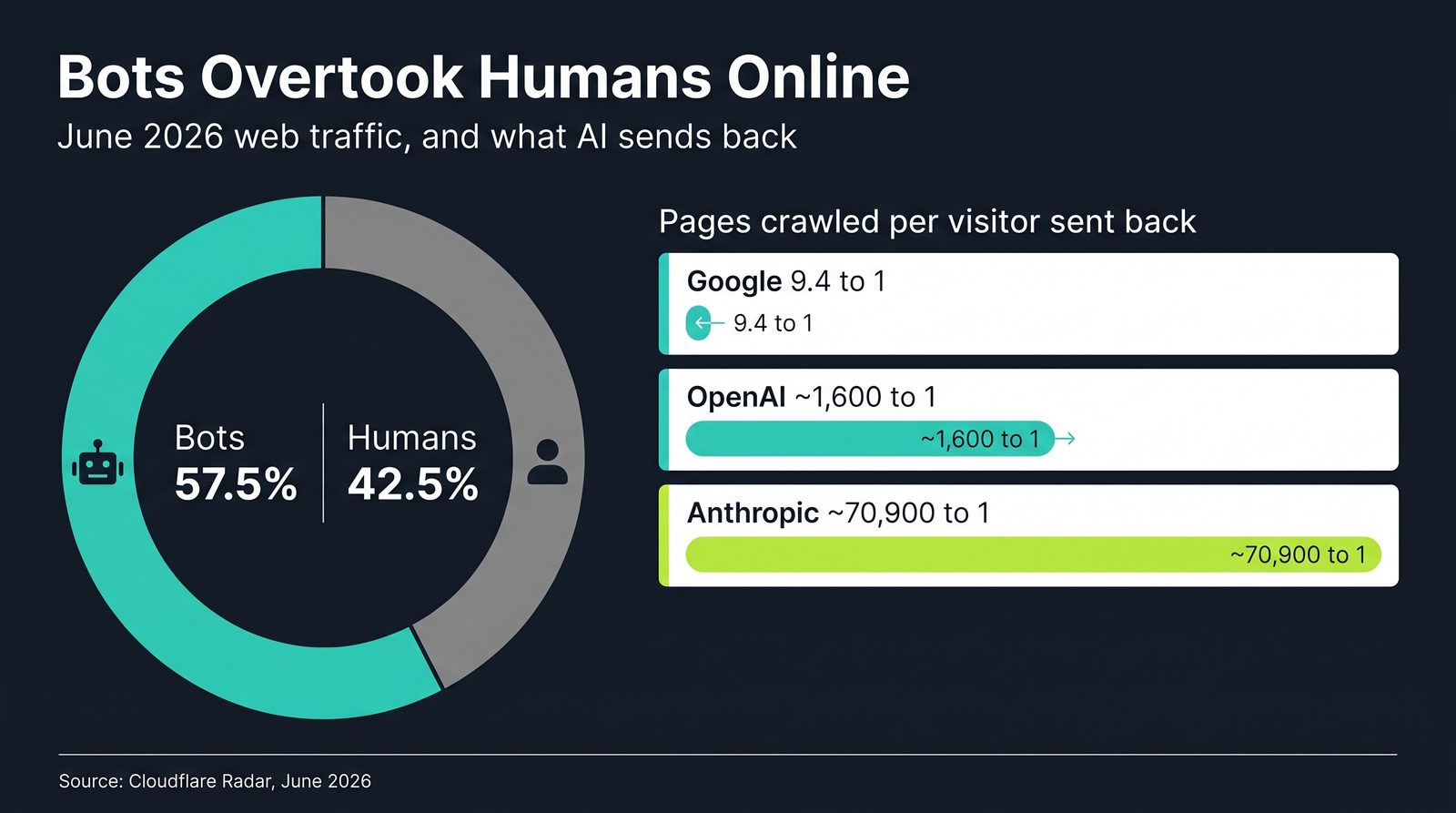
Cloudflare’s figures are stark. Google crawls about 9.4 pages for every referral it sends. OpenAI crawls roughly 1,600 pages per referral. Anthropic crawls around 70,900 pages for a single visitor.
The old bargain was simple. Search engines read your content and sent traffic in exchange. AI answer engines read far more and send back far less.
| Source | Pages crawled per referral | What it means for you |
|---|---|---|
| Google Search | ~9.4 : 1 | Crawls and still sends real traffic |
| OpenAI | ~1,600 : 1 | Heavy reading, thin referrals |
| Anthropic | ~70,900 : 1 | Reads almost everything, sends almost nothing |
You cannot fix the ratio. You can decide what you get for it. If a crawler is going to read your pages either way, the goal is to be the source it cites, not just the source it absorbs. A citation puts your name in the answer millions of people see.
Is your site letting the right bots in?
Here is the part that surprises owners most. Many brands are invisible to AI because their own site blocks the crawler that would cite them.
The usual culprit is a security setting. Cloudflare and similar services often block AI bots such as GPTBot and OAI-SearchBot by default. The intent is to stop scraping. The side effect is that the answer engine cannot read the page it was about to recommend.
The check takes minutes. Look at your robots.txt for blanket disallow rules. Review your bot-management settings for AI crawler blocks. Then confirm the page renders its key facts in plain HTML rather than loading them through scripts a crawler skips.
We see this on roughly one in three new audits. The content is strong, the brand is real, and a single rule in front of the site keeps it out of every AI answer. Removing that block is the fastest visibility win there is.
How AI decides whether to trust and cite you
Letting the crawler in is step one. Being trusted enough to quote is the harder part. Around 91% of AI citations come from third-party sources, not from the brand’s own pages.
That means your website alone rarely wins the citation. The engine cross-checks your brand against the wider web. It looks for a consistent identity, independent mentions, and structured facts that agree across sources.
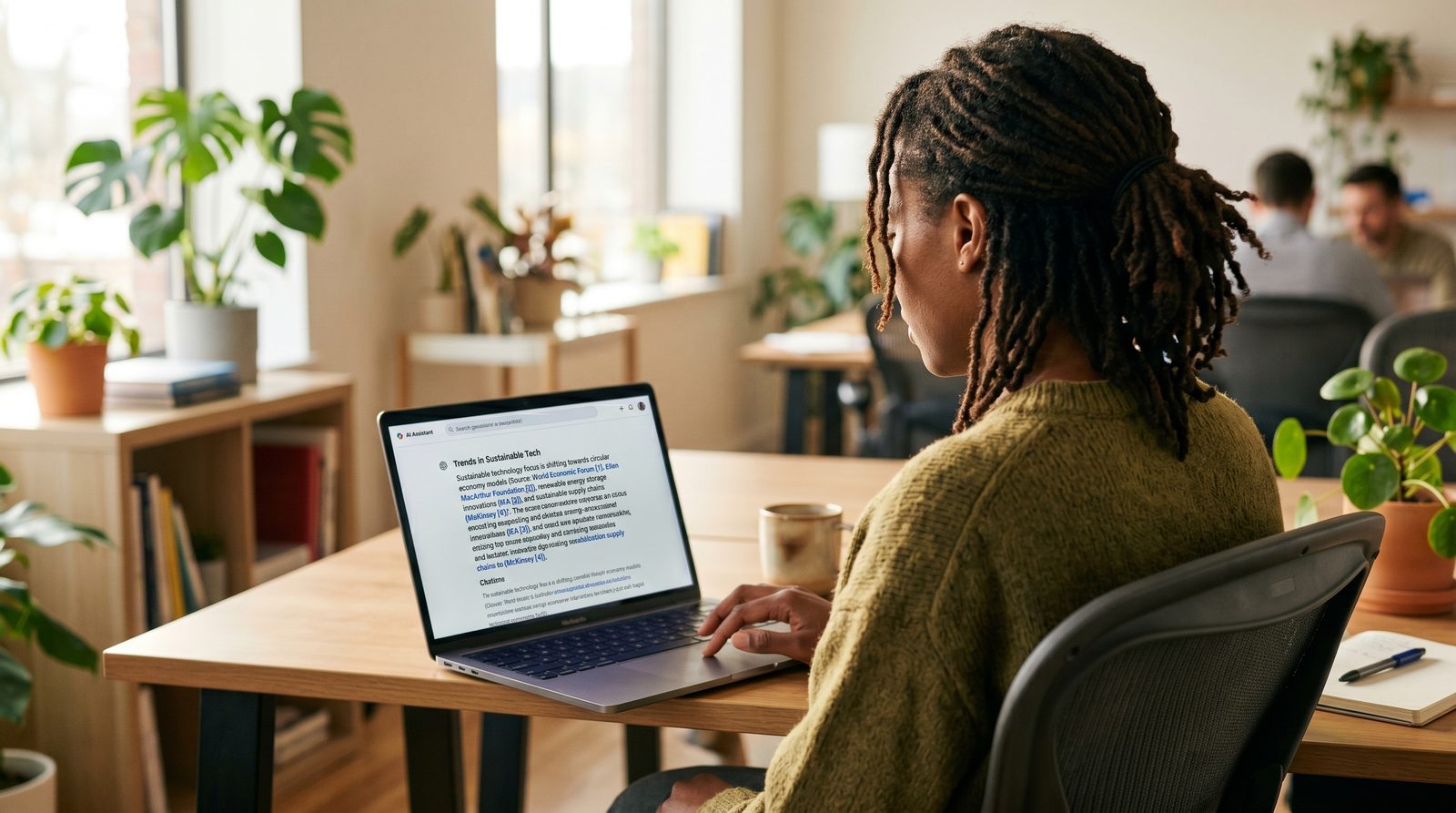
Three signals carry most of the weight. A clear entity, meaning your brand name, category and location agree everywhere they appear. Independent corroboration, meaning other sites and platforms mention you without being told to. Recent activity, meaning the web shows you are operating now, not two years ago.
A polished site with none of these reads as an anonymous domain. A modest site with all three reads as a known brand. The engine cites the known brand every time.
This is why link placements and earned mentions still matter in AI search. They are the corroboration the engine looks for. For how the link side fits the wider picture, the nine-point ChatGPT playbook ranks each lever by effort and impact.
What we changed for two brands
We have run this readability-and-trust work across several accounts. Two show the pattern clearly, with numbers from our own campaigns.
For Garden Ornaments, monthly organic visits grew from 727 to 6,370 over seven months, a rise of 776%. The biggest gains came from entity and external-authority work, not from raw link volume alone. The brand became something the engines recognised and repeated.
For Garden UK, a fresh domain went from Domain Rating 0 to 15 and from 27 referring domains to 149, up 452%. It earned 10 ranking keywords inside 30 days. The site was built crawler-readable from day one, so the corroboration work compounded quickly.
In both cases the lever was the same. Make the brand machine-readable, then make it corroborated across the web. The engines did the rest.
Your one-week machine-readability checklist
You can move your position inside a single week. Work through these in order.
Day one, confirm AI crawlers are allowed. Check robots.txt and your bot-management rules for GPTBot, OAI-SearchBot, ClaudeBot, PerplexityBot and Google-Extended.
Day two, put a direct answer near the top of every key page. Lead with the fact, then explain. Retrieval systems extract the first clear statement they find.
Day three, move important facts into plain HTML. Prices, specifications and definitions should not depend on a script the crawler skips.
Day four, align your brand identity. Name, category and location should match across your site, your listings and your review profiles.
Day five, audit corroboration. Search your brand and category in each engine. Note who gets cited and where their mentions come from. That gap is your link and digital-PR brief. Our guide to getting cited by Perplexity and the multimodal content findings cover two of the fastest follow-up wins.
What to do this week
Start with the crawler check, because it gates everything else. A blocked bot cannot cite you no matter how good the content is. Then fix the answer placement and the entity consistency. Those three steps move most sites inside 30 days.
If you want to see where your brand stands right now, the free AI Visibility Check scans ChatGPT, Gemini, Perplexity, Claude and Google AI Overviews in minutes and shows which queries cite you and which do not.
For a ranked plan of the corroboration work that would lift your citation rate fastest, the backlink and citation audit is where most new engagements begin. It takes five working days and ends with a priority list you can act on straight away.