1,885 Pages Tested: Schema Markup Didn't Move AI Citations

Ahrefs ran a causal test on 1,885 pages in May 2026 and found JSON-LD schema markup made no significant difference to AI citations. Pages carrying schema were cited at the same rate as pages without it. We add schema to every site we run, including this one, and the evidence still says it will not earn you a single citation. This post covers what schema actually does, and what moves citations instead.
What the Ahrefs study found
Most schema advice rests on correlation. This study was built to find cause, which is why the result matters.
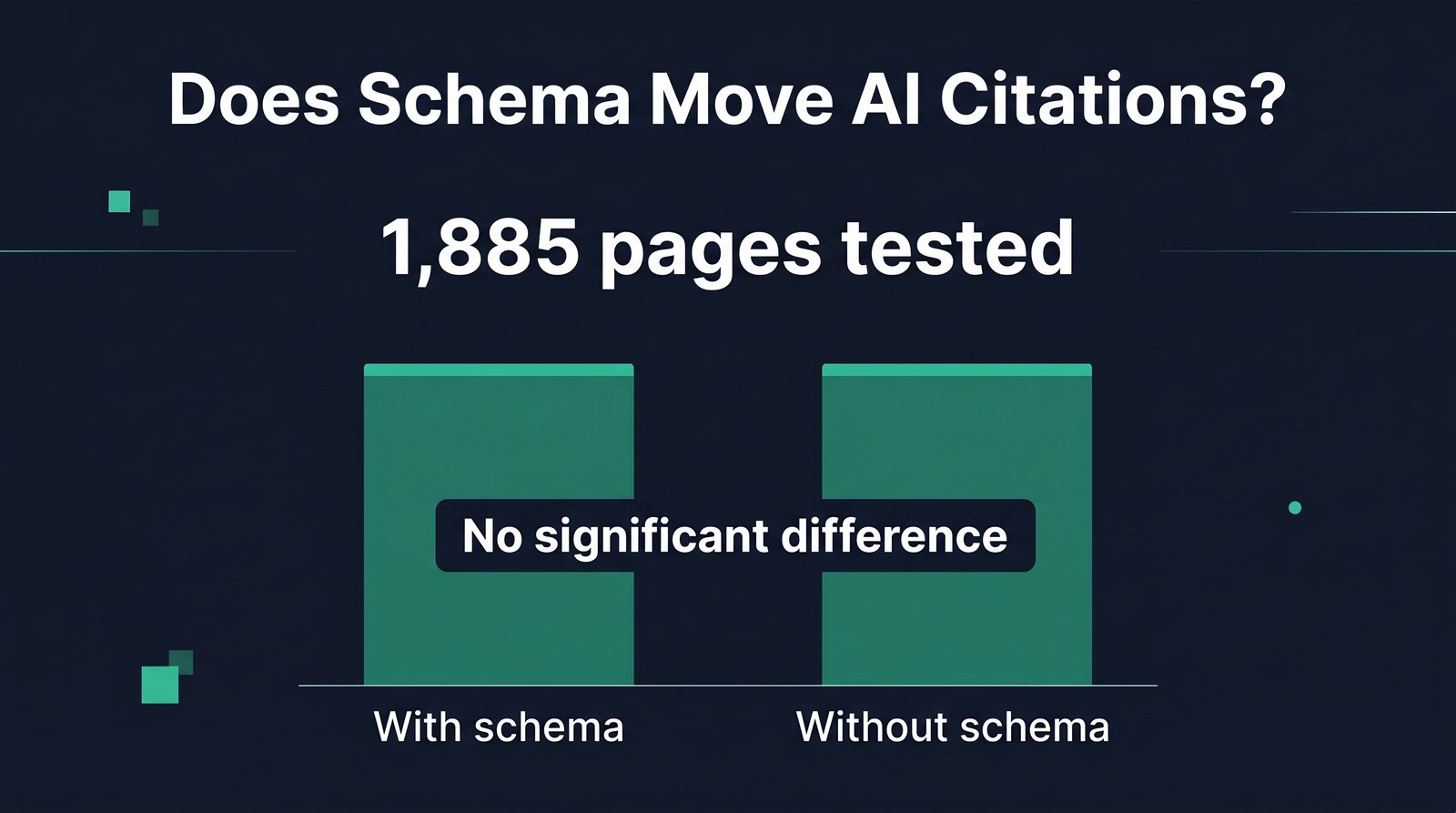
Ahrefs compared pages with and without JSON-LD structured data and measured how often AI engines cited each group. Across 1,885 pages, the schema group showed no significant uplift. Not a small lift. No measurable lift at all.
That lands hard against the advice industry. “Add schema for GEO” has been the most repeated tip of the past 18 months. It appears in almost every AI-visibility checklist sold to UK businesses. The one controlled test we have says the tactic does nothing for citations.
A study this size has limits, and Ahrefs says so. It cannot rule out tiny effects in narrow niches. But the burden of proof has flipped. Anyone billing for schema as a citation tactic now argues against the data.
Why the myth spread anyway
The myth has logic on its side, which is exactly why it survived so long. Schema makes a page machine-readable. AI engines are machines. Surely labelled data helps them quote you.
The flaw is in how language models actually consume pages. They read rendered text, the same words a human sees, pulled in by a crawler and fed through retrieval. They do not parse your JSON-LD block and reward you for tidy syntax. If your visible copy states the fact plainly, the engine has what it needs. If it does not, no markup can rescue it.
There is a commercial reason too. Schema is a perfect agency deliverable. It is technical enough to sound expert, easy to implement at scale, and simple to report as done. Citations themselves are harder to move, so the proxy got sold instead.
Correlation finished the job. Well-run sites tend to have schema and citations, so audits kept finding them together. The Ahrefs test is what separated the two.
The three jobs schema still does
We are not telling you to delete anything. This page you are reading carries Article, BreadcrumbList and FAQPage schema. It earns that markup for three reasons, none of which is AI citations.
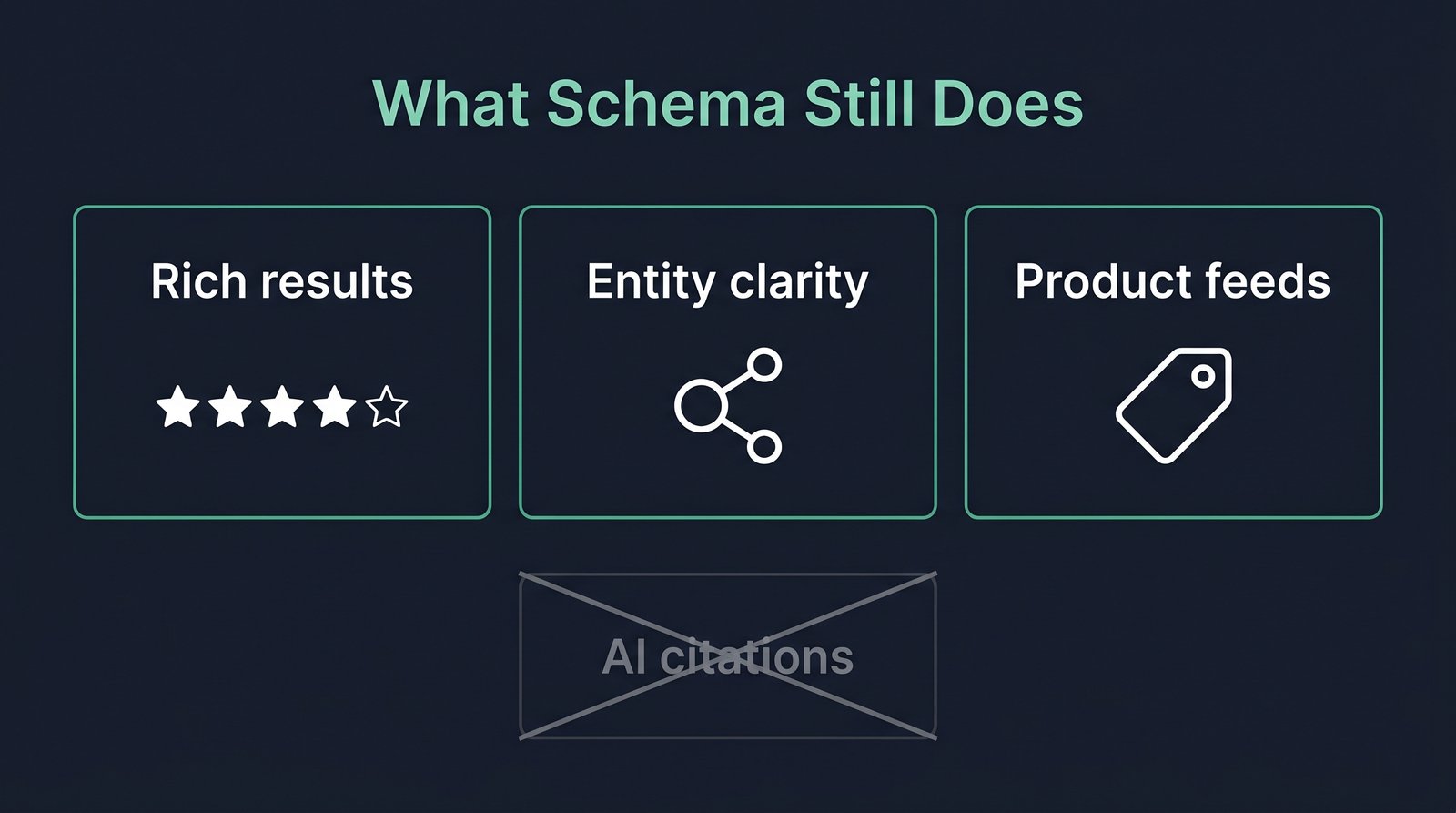
First, rich results in classic Google search. Product stars, prices, stock status and breadcrumbs still lift click-through on the SERPs that remain. That is a real return, just a shrinking one as AI surfaces grow.
Second, entity disambiguation. Organization schema with accurate sameAs links helps Google connect your name to the right company in its Knowledge Graph. Since Gemini and AI Overviews sit on Google’s index, a clean entity record has indirect value there.
Third, feeds. Product schema keeps Merchant Center listings accurate, which matters for Shopping and for the product results AI surfaces increasingly borrow.
Thirty minutes per template covers all three. Anything beyond that is budget taken from work that moves citations.
What actually moves AI citations
The same test culture that killed the schema myth keeps confirming what works. Four signals carry the weight.
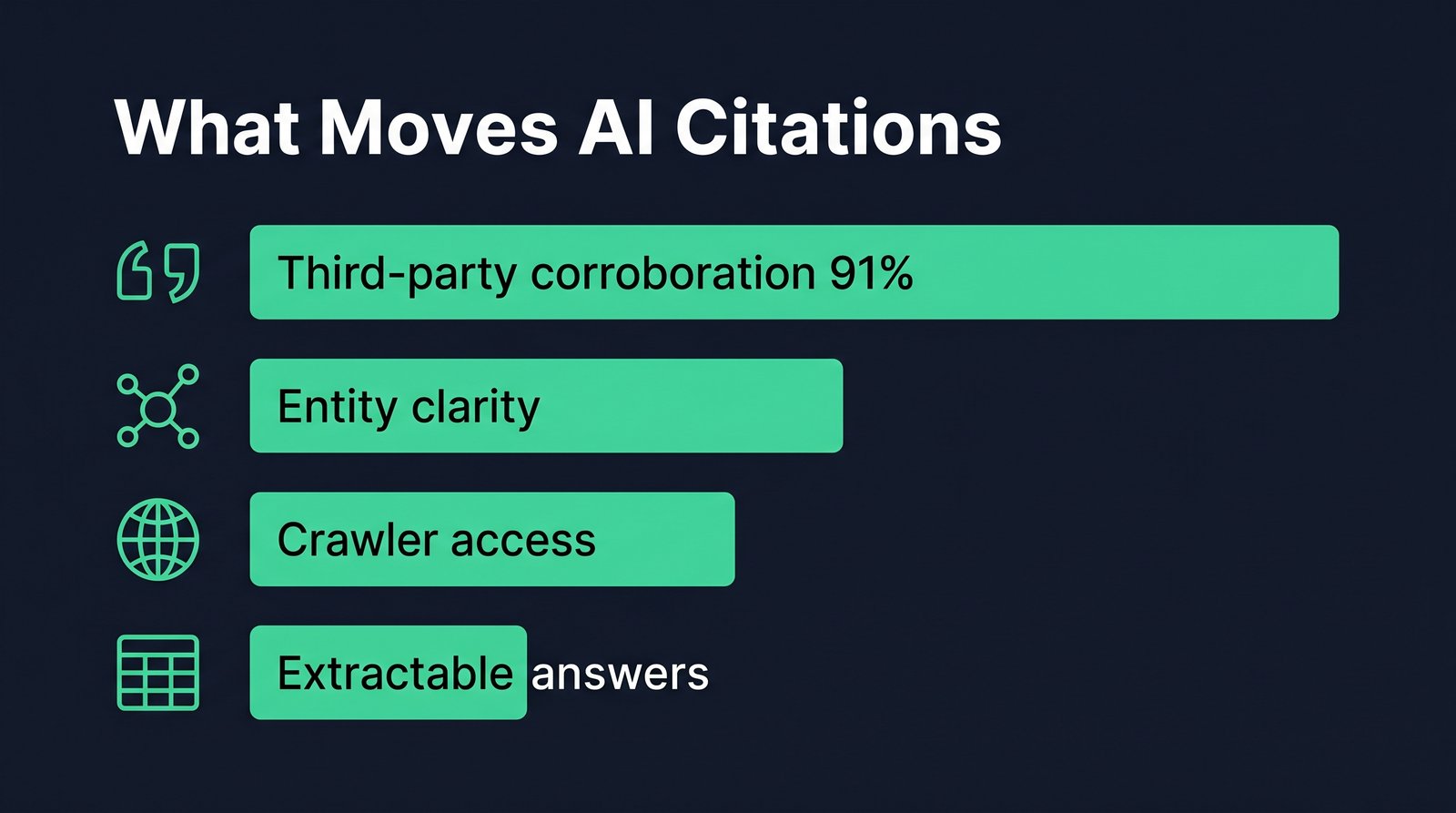
Corroboration comes first. Around 91% of AI citations point at third-party sources rather than brand-owned pages. Independent mentions, listings and reviews are the trust layer every engine checks. Review platforms alone can shift results: we measured the effect in our Trustpilot and G2 citation data.
Crawler access comes second. Automated traffic passed 57.5% of all web requests this month, and bots now outnumber human visitors. A firewall rule that blocks GPTBot or ClaudeBot removes you from those engines entirely. No on-page tactic survives a blocked crawler.
Then come extractable answers: plain statements, specific numbers, tables an engine can lift whole. Multimodal structure correlates with AI Overview presence at 92% in Ahrefs’ earlier study. Words on the page beat markup behind it.
Our own before-and-after
One of our case studies makes the point cleanly, because schema was the constant and content was the variable.
Garden Ornaments had carried correct Product and Organization schema for years. Traffic still slid for two quarters and bottomed at 727 monthly organic visits in October 2025. The markup was present, valid and doing nothing to stop the fall.
We rebuilt the visible content instead: extractable answers, owned numbers, comparison tables, corroborated entity signals. Seven months later the site reached 6,370 monthly visits, a 776% rise, with net referring domains actually falling over the period. The full breakdown is in the Garden Ornaments case study.
Same schema before and after. The words changed, and the result changed. That is the schema lesson in one site.
A sensible schema policy for 2026
Keep schema, automate it, and cap the spend. Validate your templates once, fix errors when they appear, and put the saved hours into corroboration and answer-ready content. If a proposal lists structured data as a monthly GEO deliverable, ask the vendor for their citation evidence, because the published test says no.
To see where you actually stand, the free AI Visibility Check scans ChatGPT, Claude, Gemini, Perplexity and Google AI Overviews and shows which queries cite you today. It reads the signals that move citations, not the markup that does not.